
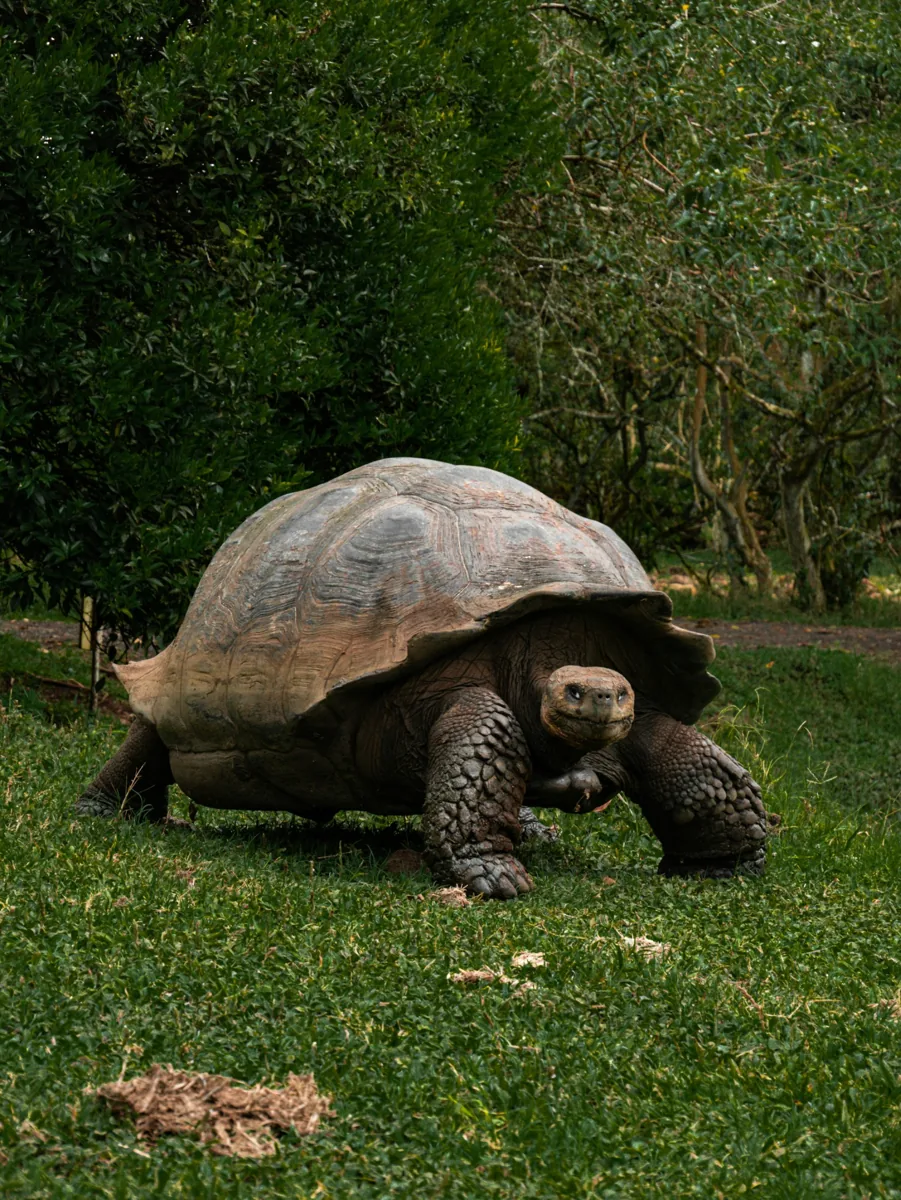
Giant tortoises wandering through the highlands. Marine iguanas stretched across black volcanic rocks. Sea lions occupying beaches with considerably more confidence than the people visiting them.
The Galápagos Islands are unlike anywhere else. But deciding to go is only the beginning. The next question can fundamentally change the experience: do you stay on land and explore the islands by day, or travel aboard a small expedition ship?
Both approaches can be excellent. Both offer remarkable wildlife encounters. But they do not necessarily take you to the same places, provide the same opportunities or suit the same kind of traveller.
Why your choice matters more in the Galápagos
The Galápagos is an archipelago of volcanic islands around 1,000 kilometres from mainland Ecuador. Much of the land and surrounding marine environment is protected, with visitor access carefully managed. Some places can be explored independently, while many protected visitor sites require authorised guided excursions.
An island might look close on a map but be too far away for a practical day trip. Others have no visitor accommodation. Wildlife is also concentrated in particular habitats rather than evenly distributed across the islands. The real question is where you will go, what you can do there and how much time you will spend exploring.
Option one: Staying on land
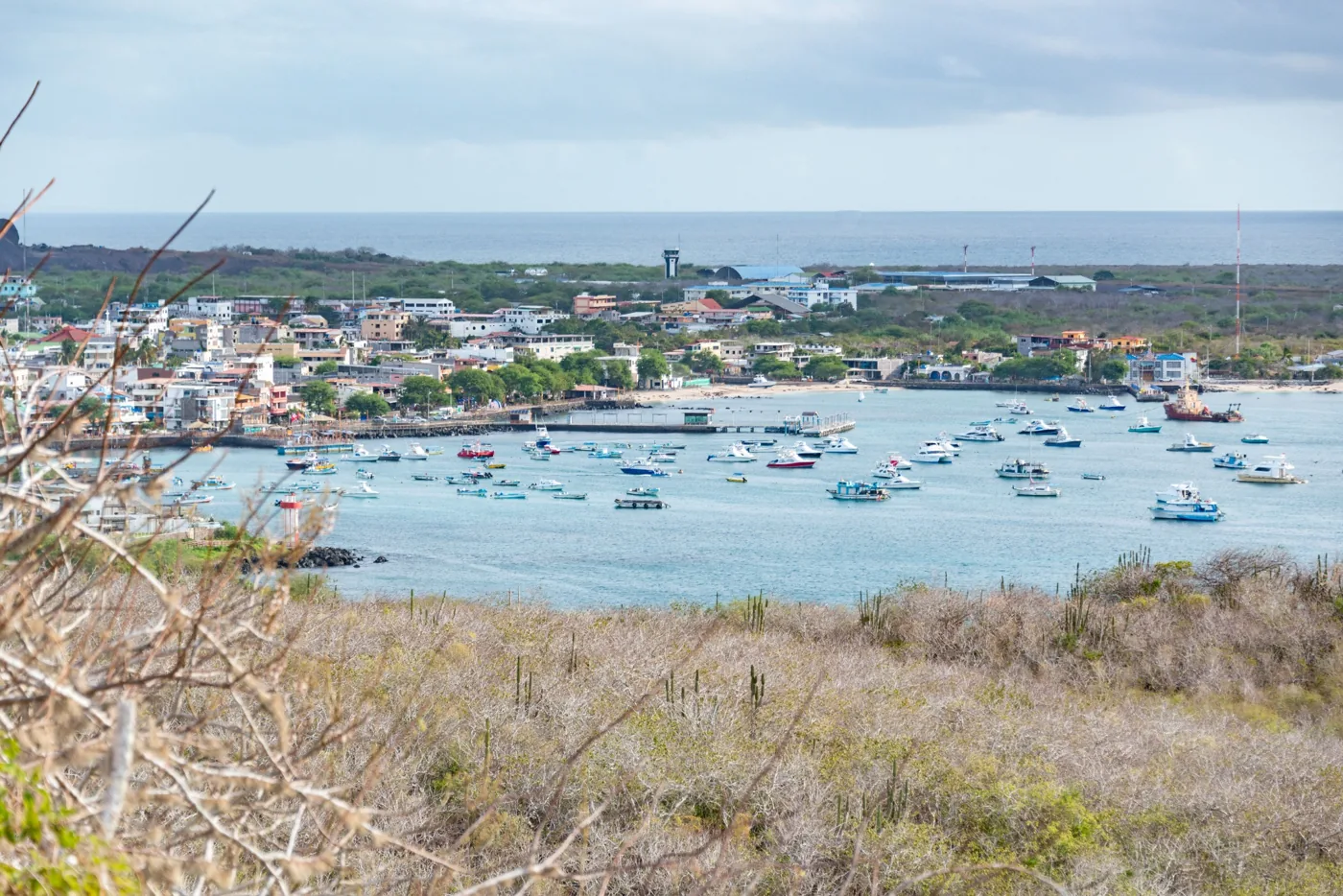
A land-based holiday usually involves hotels or guesthouses on one or more inhabited islands, with excursions by boat or on foot. The most common bases are Santa Cruz, San Cristóbal and Isabela.
Santa Cruz: The practical starting point
Santa Cruz is home to Puerto Ayora, a main tourism centre with restaurants, accommodation and access to the Charles Darwin Research Station. In the highlands, visitors can see giant tortoises in their natural environment. Authorised day boats can visit sites such as North Seymour, Bartolomé, Santa Fe and South Plaza, subject to routes and availability.
San Cristóbal: Sea lions and marine life
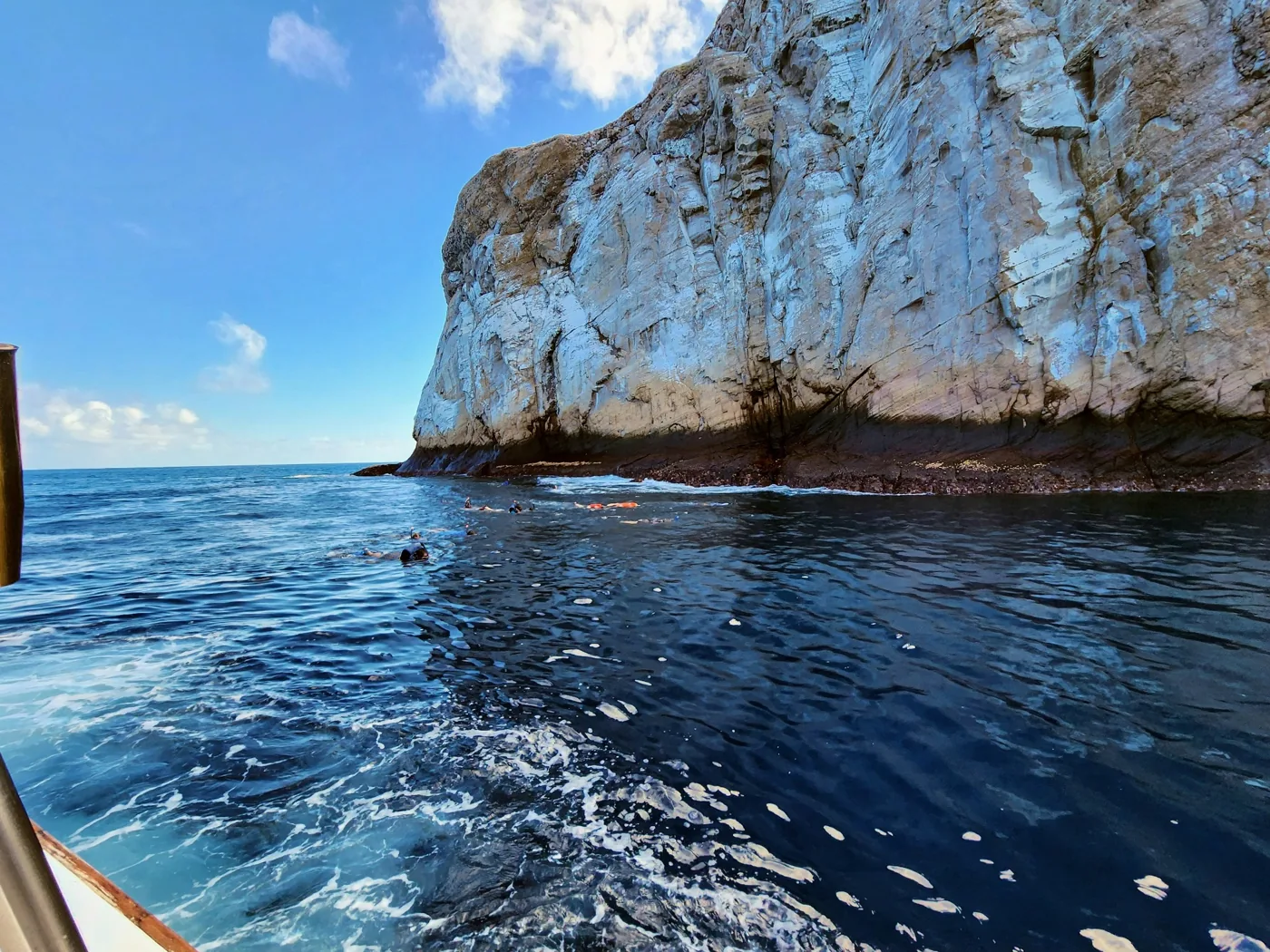
Sea lions are part of everyday life around Puerto Baquerizo Moreno. Excursions can include Isla Lobos and Kicker Rock, making the island appealing to travellers interested in snorkelling and marine wildlife.
Isabela: Volcanoes and a slower pace
Puerto Villamil has a smaller-scale feel, with volcanic landscapes, lagoons and excursions to Las Tintoreras or Sierra Negra. Staying on Isabela does not, however, automatically give access to remote western visitor sites visited by some expedition cruises.
Why choose a land-based holiday?
Flexibility is the main advantage. Choose your accommodation, enjoy local restaurants, spend time in island communities and explore some designated places independently. It can also be less expensive at the outset, although the number and standard of included excursions make a substantial difference.
What are the limitations?
Day boats have to return to their departure island, restricting geographical reach. Island hopping takes time, involves scheduled transfers and can mean uncomfortable sea crossings. Reaching an inhabited island independently also does not mean every protected wildlife site nearby is freely accessible.
Option two: An expedition cruise
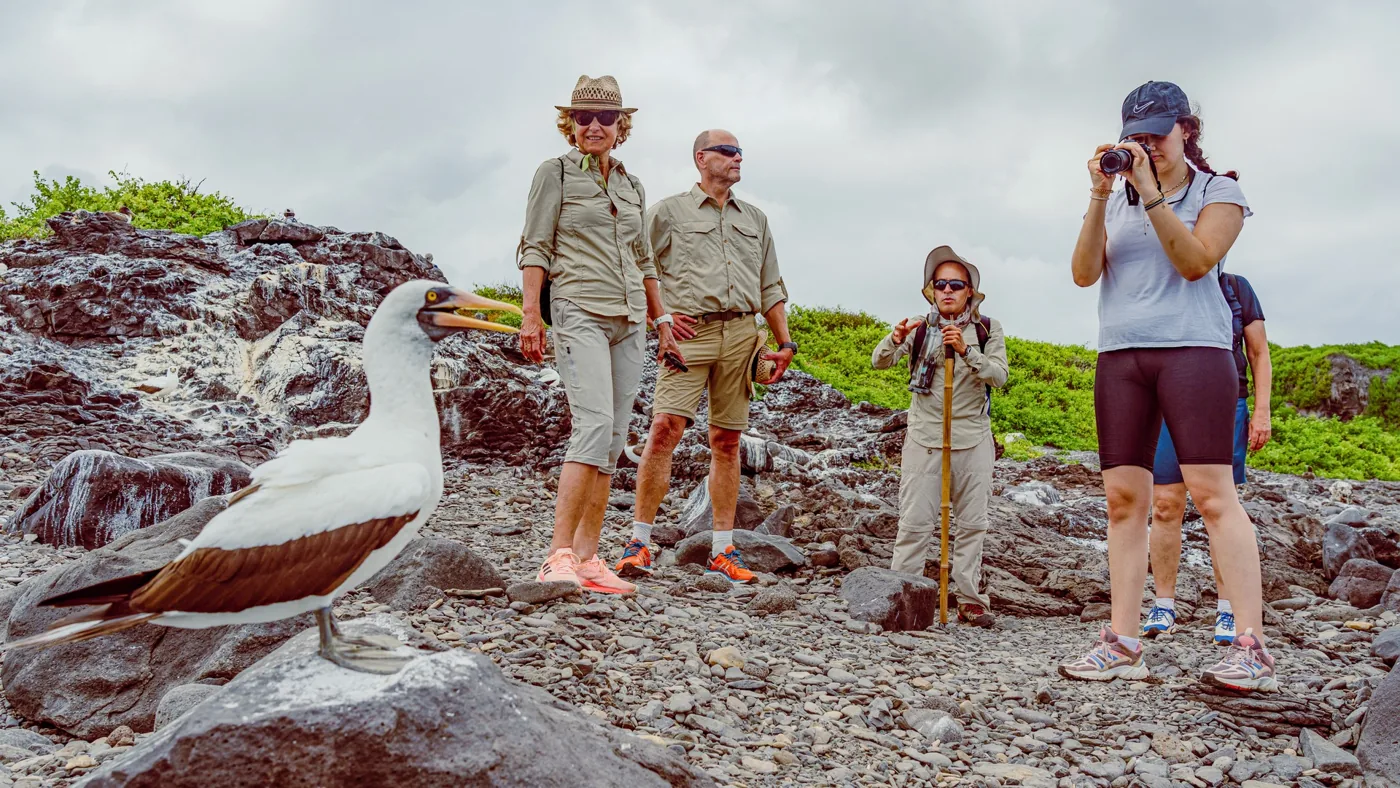
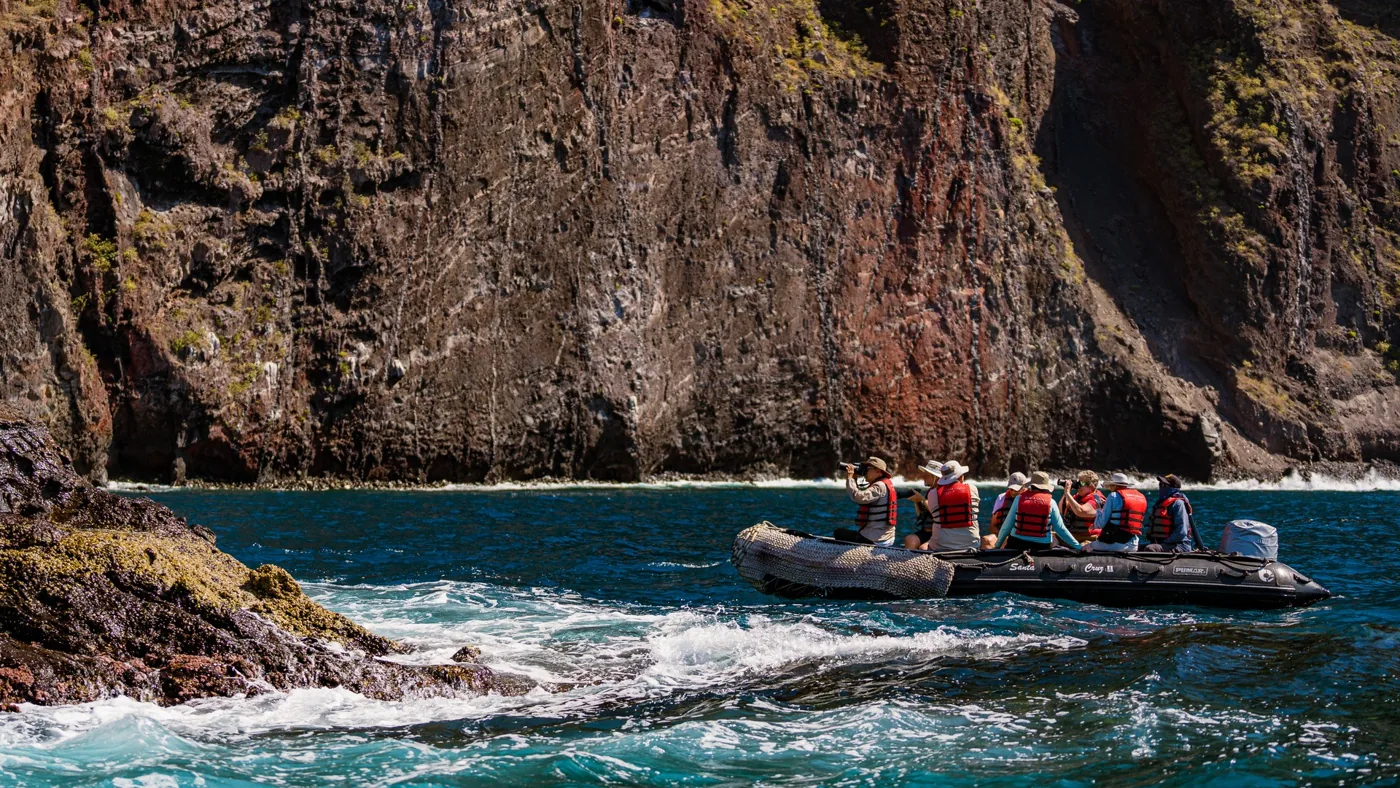
A Galápagos expedition cruise is not a conventional resort-style cruise. Small ships travel along authorised routes, often between islands overnight, while days focus on guided shore walks, snorkelling and small-boat exploration. Naturalist guides explain the wildlife, geology and conservation of the archipelago.
What does a typical day look like?
You might walk a volcanic shoreline in the morning, snorkel with sea turtles or sea lions later, and explore a different coastline by small boat in the afternoon. Actual activities depend on the route, conditions and your ability to participate.
Why the itinerary matters more than the ship
Cabins, dining and onboard comfort matter, but start by comparing routes. A voyage visiting the western islands may offer very different wildlife opportunities from one focused on the central or eastern archipelago. A more expensive ship does not automatically mean a better wildlife itinerary.
Different styles of expedition cruising
HX Expeditions offers Galápagos voyages aboard MS Santa Cruz II in partnership with Metropolitan Touring, with a focus on exploration and interpretation. Lindblad Expeditions is another wildlife-focused option, while Silversea’s Silver Origin offers a more luxury-oriented onboard experience within an expedition format. Smaller specialist yachts provide further choices.
For a sense of the different approaches, see HX’s Galápagos experience and Silversea’s Galápagos introduction. Compare the actual departure and route before choosing an operator.
Will you see more wildlife on a cruise?
An expedition cruise can reach a wider range of habitats, particularly on remote routes. But a land-based holiday can still offer extraordinary encounters. The species you want to see, and the places you visit, matter most.
| Wildlife | What to consider |
|---|---|
| Giant tortoises | Santa Cruz highlands are accessible on land-based stays. |
| Sea lions | Found at inhabited and uninhabited island locations. |
| Marine iguanas | Present across the archipelago, with local variation. |
| Blue-footed boobies | Several sites, including some day-boat destinations. |
| Red-footed boobies | Colonies include Genovesa and parts of San Cristóbal. |
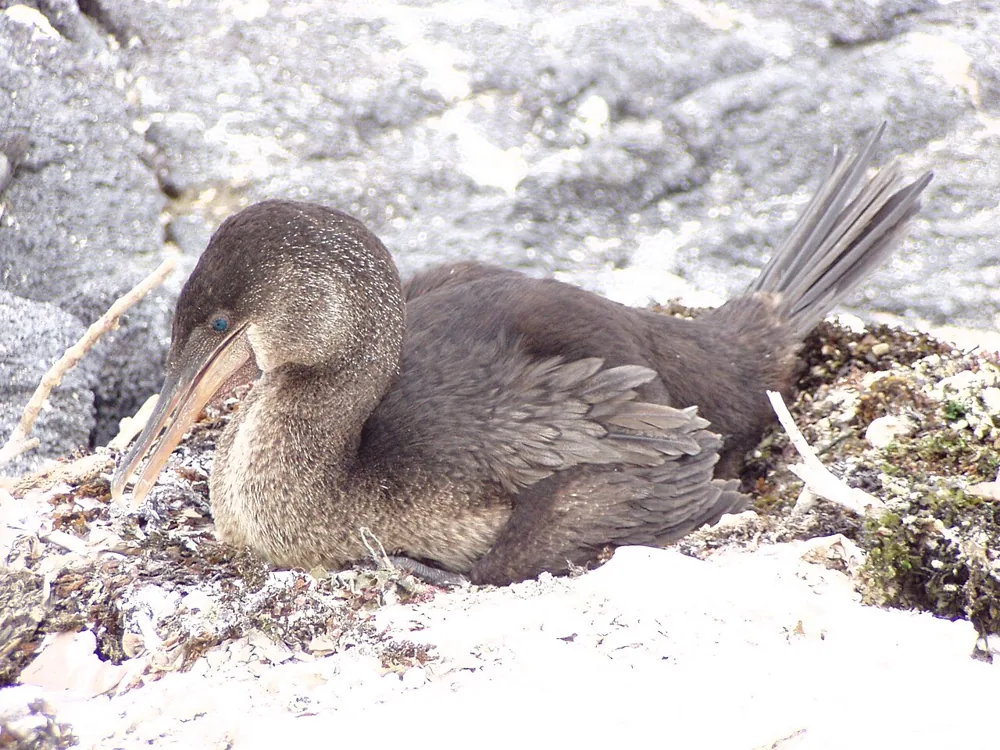
| Flightless cormorants | Associated with Fernandina and western Isabela; check western cruise routes. |
| Waved albatrosses | Strongly associated with Española during their breeding season. |
| Galápagos penguins | Concentrated particularly around western islands; sightings vary. |
Wildlife sightings are never guaranteed. Choosing the right habitats and season can improve your chances, but a cruise is not essential for every wildlife experience.
When is the best time to visit?
December to May: Warmer conditions
Air and sea temperatures are generally warmer, with a greater chance of tropical showers. Seas are often calmer, although conditions vary.
June to November: Cooler, nutrient-rich waters
Cooler currents bring nutrients that support marine life. Water temperatures fall and seas can be choppier; a wetsuit may make snorkelling more comfortable.
Species have their own calendars. Waved albatrosses, for example, are associated with Española during much of their breeding period, but not equally throughout the year. There is no single best month for everyone.
What about seasickness and accessibility?
Staying on land does not necessarily avoid rough seas: smaller day boats and inter-island speedboats can be uncomfortable. Expedition ships also cross open water, sometimes overnight. Compare the actual boat travel involved, rather than assuming either style will be smoother.
If mobility is a concern, check wet landings, transfers into smaller boats, uneven volcanic paths and the pace of activities. Arrangements differ between operators and visitor sites.
Is a land-based holiday cheaper?
Often, but not always by as much as the headline price suggests. Hotel-based trips may cost less initially, yet guided excursions, boat transfers, meals and accommodation upgrades add up. Cruises may bundle meals, guiding and many activities, but inclusions differ.
Compare exploration days rather than total holiday length. A ten-day itinerary including mainland transfers and flights is not directly comparable with a shorter trip offering more full days at wildlife sites. Check park fees, equipment, gratuities and anything charged separately.
Which option is more sustainable?
The Galápagos is environmentally sensitive, and both styles have impacts. Ships use fuel and operate in protected waters; land-based tourism places demands on infrastructure, water, waste management and island communities. Neither is inherently the greener choice. Look for evidence of responsible operations, compliance, conservation support and local benefit rather than relying on broad sustainability claims.
Can you combine land and cruise?
Yes. A stay on Santa Cruz or San Cristóbal before or after an expedition can combine local island life with access to more remote sites. Another option is to add mainland South American touring. Some itineraries combine Peru, Machu Picchu and the Sacred Valley with a Galápagos cruise, although this is different from staying on land within the Galápagos.
Explore further options on the Galápagos destination page. [Add confirmed internal destination-page URL in Wix]
Beyond the Brochure: Five questions worth asking
- How many genuine exploration days are included? Separate full Galápagos activity days from flights and transfers.
- Which islands and visitor sites will I actually visit? A destination name alone tells you little about the route.
- Does the route match the wildlife I want to see? Some species are geographically concentrated or seasonal.
- What are the physical demands? Check landings, walking surfaces, snorkelling and boat transfers.
- What is the total cost? Include flights, transfers, fees, meals, equipment and optional excursions.
How I can help you choose
The difficult part of planning a Galápagos holiday is not necessarily finding a hotel or cruise. It is understanding what you are actually getting. Two itineraries can look similar but visit different islands, include different activities and provide very different amounts of exploration time.
As an independent travel advisor, I can compare land-based tours, expedition cruises and combined itineraries across operators. We can look beyond headline prices at wildlife interests, routes, excursion demands, accommodation and inclusions. You do not need to know which operator or island is right before getting in touch.
So, which would I choose?
Choose a land-based holiday if you value independence, local restaurants, island communities and time at your own pace.
Choose an expedition cruise if wildlife-focused exploration, naturalist-led activities and access to a wider variety of visitor sites are your priorities.
Combine the two if you have the time and budget to enjoy both island life and remote exploration.
Whichever you choose, look carefully at the route. In the Galápagos, the places you visit can matter more than the name on the hotel or ship.